The Game Merchant
Chinatown Board Game 2-6 Players Business Strategy Game for Party/Family Table Games
Chinatown Board Game 2-6 Players Business Strategy Game for Party/Family Table Games
Couldn't load pickup availability
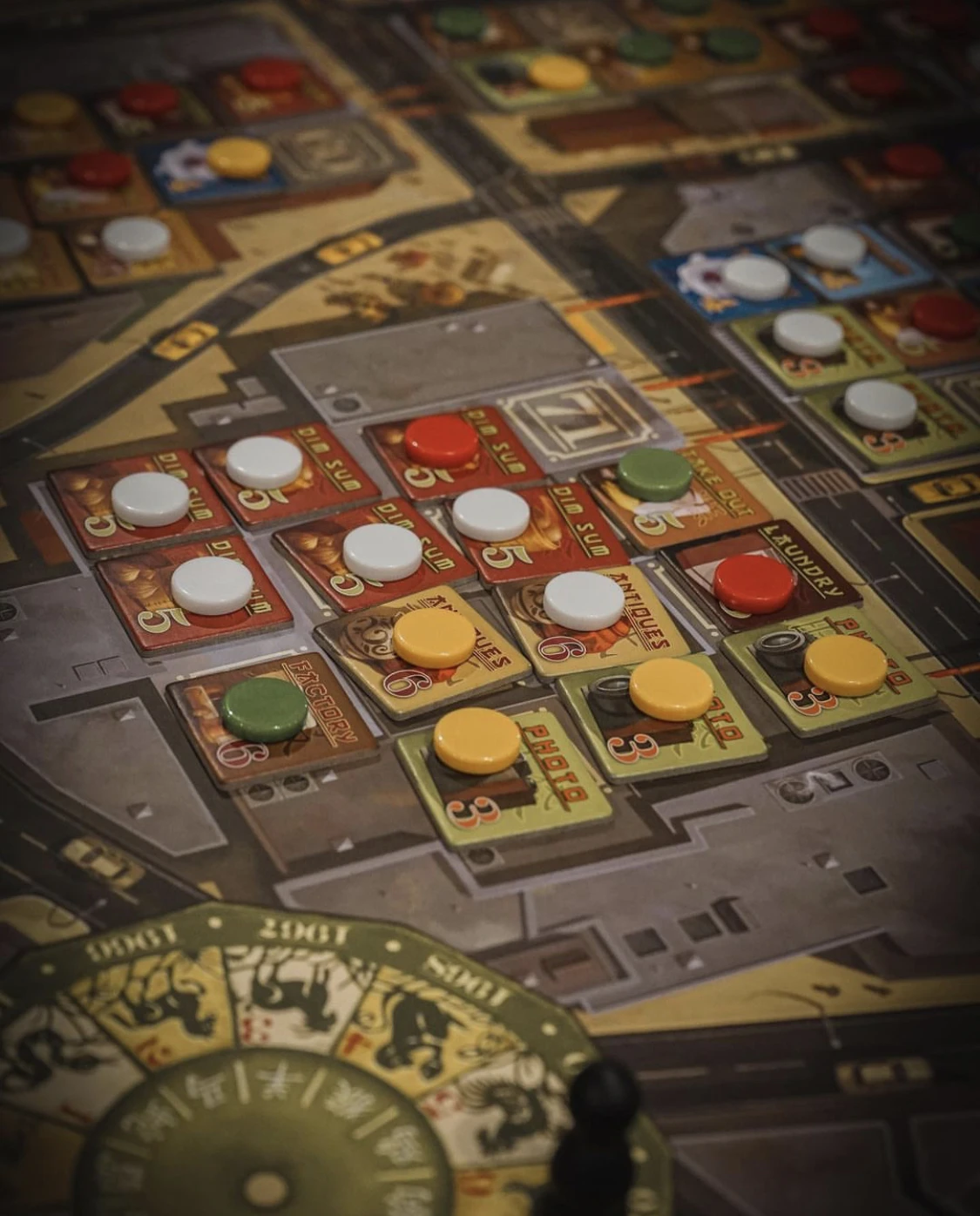
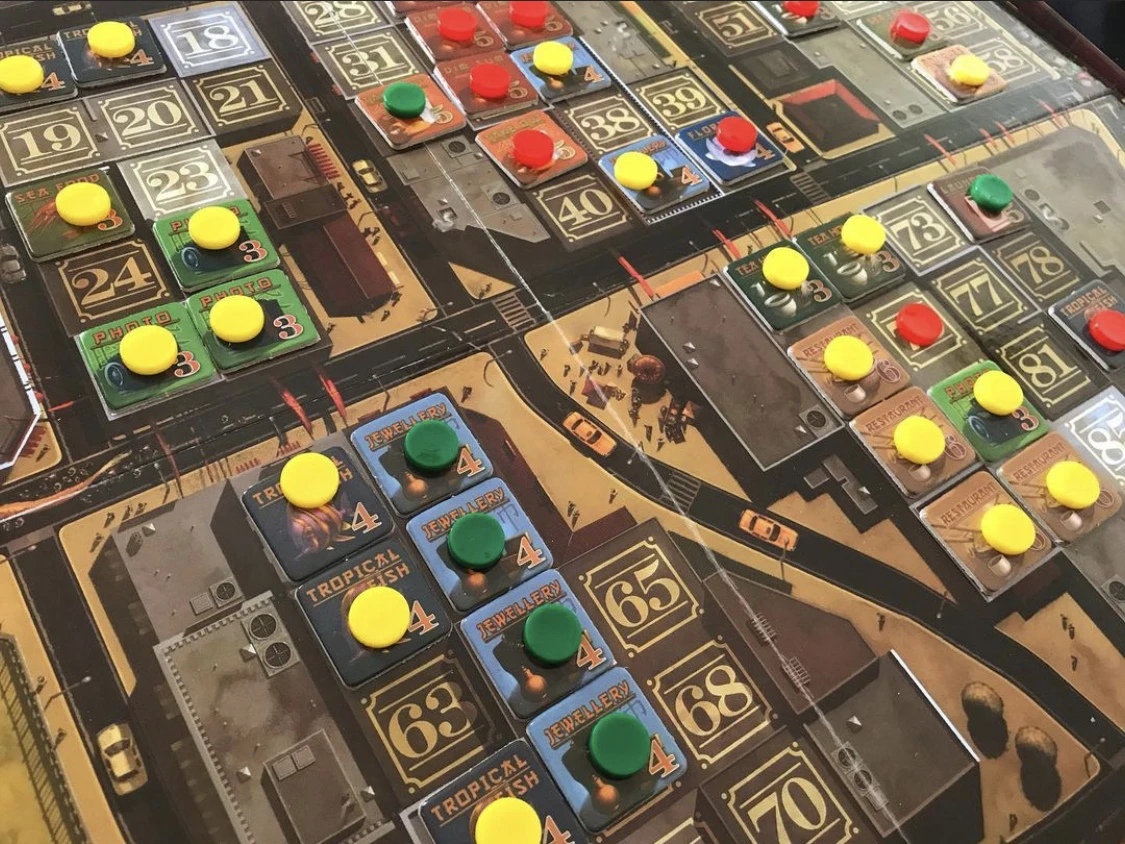
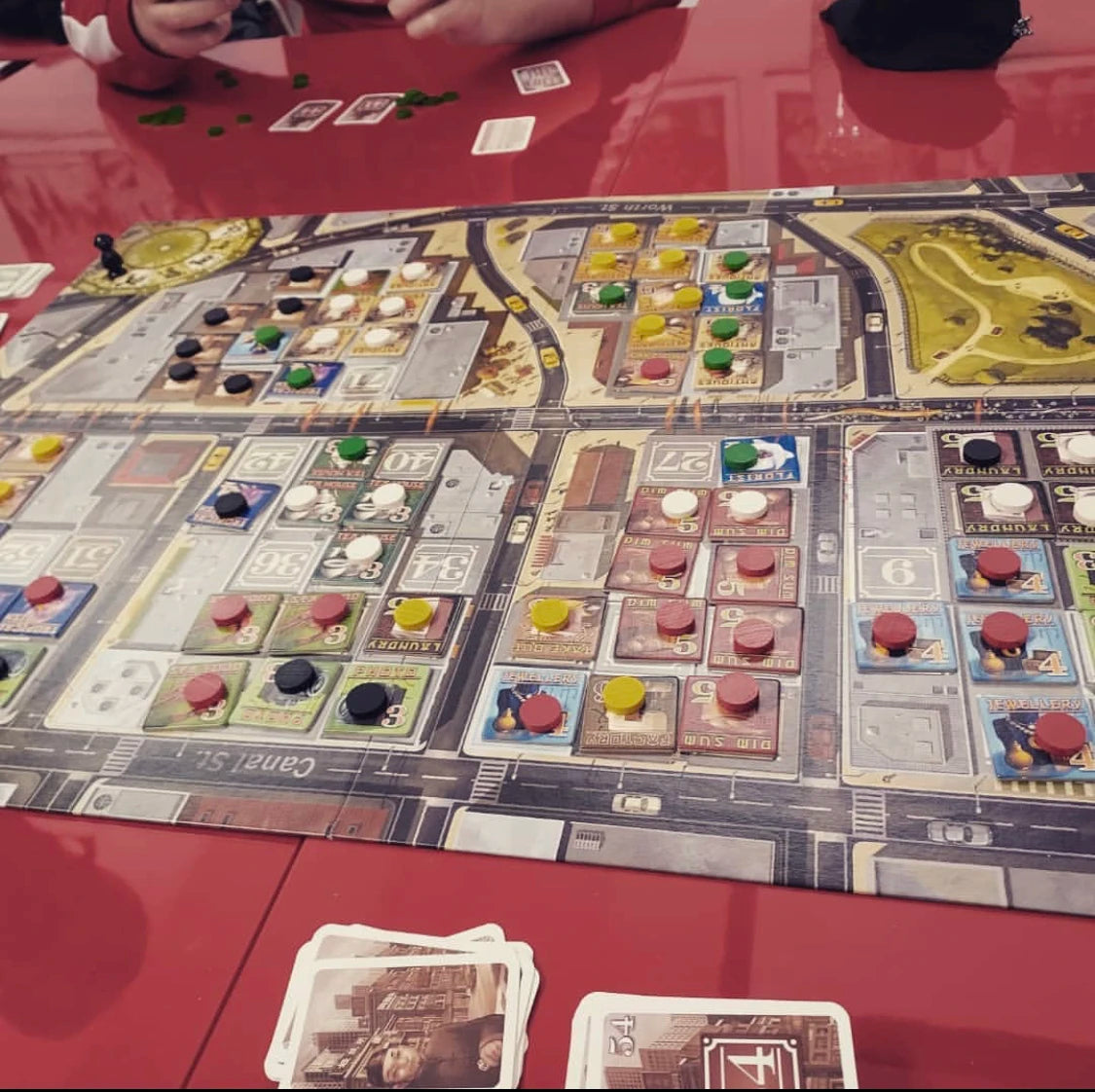
It's a shop game. The Chinatown on the game board is divided into 6 areas with a total of 85 shops. The 85 shop plates are printed with the numbers 1-85, which represents the ownership of the shop. There are also 90 store sections, divided into 12 industries, printed with the numbers 3 to 6 according to industry classification. The numbers on the store segment represent the largest size of the industry. The goal of the player is to obtain a connected piece of shops through trading, and open the same industry on it to earn the most profits.
Before the game starts, each player takes a symbol of a certain color and 50k yuan (money is divided into 10k, 50k, 100k and 200k). Place all the shop blocks in a cloth bag and shake. The time stamp is placed at the 1965 location, and any player starts the game.
The game takes only 6 rounds (per year). The process for each round is as follows.
1. Shops
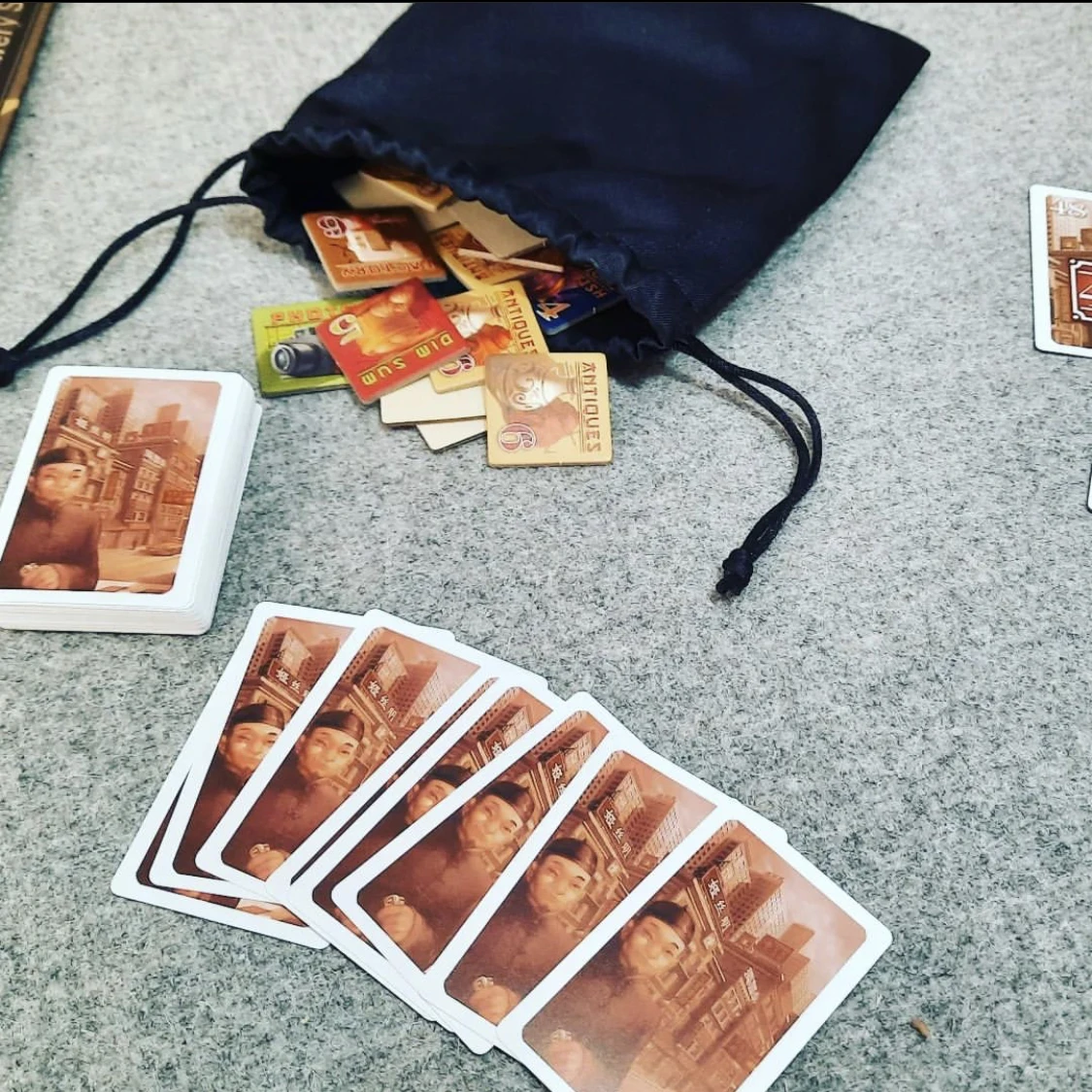
Shop cards are reshuffled and mixed at each turn. Depending on the number of players and the number of rounds being played, a different number of shop cards are allocated to each player, and each player retains a specified number of shop cards. Shop cards discarded by the player are returned to the deck. After all players have discarded their cards, they place their marks on the designated stores on the board according to the store cards they have retained, and then return the retained cards to the box.
3 player game: 7/5; 6/4; 6/4; 6/4; 6/4; 6/4
4 player game: 6/4:5/3:5/3:3:5/3:3:5/3
5 player game: 5/3:5/3:5/3; 4/2; 4/2; 4/2
Example: In the first three rounds of a five-player game, each player gets five shop cards and keeps three. In the next three rounds, each person will only get four shop cards and keep two.
Step 2: Shop
Depending on the number of players and the number of rounds being played, each player draws more or less of the store from the bag. Draw the number of stores, the first round is the larger number in step 1 above; The remaining rounds are the smaller numbers in step 1 above.
Example: In the first round of a five-player game, each player draws five store blocks. In rounds 2 and 3, each player will only draw 3 stores. For the rest of the round, each player draws only two shop boards.
Step 3 Trade
Players also freely trade their possessions. Money, shops, shops and shop sections can all be traded. Store sections that have been placed on the store cannot be moved or removed. If trading with a shop, or a shop section already placed on a shop, change the player mark on it.
Future commitments are not binding.
This step is complete when everyone has completed or stopped trading.
Step 4 Set up shop
Starting from the starting player, the player decides, one by one, in a clockwise direction, how many stores to place on their store. Players can keep the shop block for later rounds.
5. Income
The player receives income according to the stores on the board. Each store that is the same and connected (up, down, left and right) is the same store group theory. The number on the store section represents how many connections are needed to make a complete store group.
If the number of connected stores exceeds the number on the board, a group theory of 2 or more stores is used and the revenue is calculated separately.
The revenue of a group of stores depends on the number and completeness of its sections.
Incomplete: 1 10k; 2 20k; Three 40k; 4 60k; Five 80ks
Complete: 3 50k; 4 80k; 5 110k; Six 140k
Example: Connect 4 teahouses (3) to form a group theory of 2 shops. Complete tea houses (3) earn 50k, incomplete tea houses (1) earn 10k.
The game continues until six rounds are completed, and the player with the most money wins the game. If you have the same amount of money, the one with more stores on the board wins.